
Shopping Cart
There are no more items in your cart
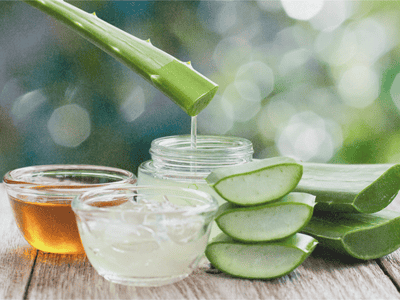
DIY aloe vera gel with fresh pulp
Homemade aloe vera gel is a natural cosmetics staple: moisturizing, soothing and repairing, it can be used for both skin and hair.
But beware: fresh pulp is not very stable. Without preservatives, it degrades rapidly in the refrigerator. Below are two options: an express version for immediate use, and a longer-lasting, stabilized DIY version.
Aloe vera gel from fresh plant (immediate use)
Use: within 24-48 h, stored in the fridge.
Ingredients:
- 1 large fresh aloe vera leaf (preferably organic)
- A few drops of lemon juice (limits oxidation)
Preparation:
- Cut the leaf at the base and allow the yellow sap (aloin) to drain off for a few minutes.
- Remove the spiny edges, lift the epidermis and recover the transparent pulp.
- Blend the pulp with 2-3 drops of lemon juice to homogenize.
- Transfer to a sterilized jar and store in the fridge for up to 2 days.
Stabilized aloe vera gel (keep refrigerated)
Use: longer-lasting thanks to a gelling agent and a preservative.
Ingredients (for ~100 ml):
- 90 ml pure aloe vera juice/pulp (commercially available or freshly filtered)
- 0.6 g xanthan gum (gelling agent)
- 0.6 g Geogard (cosmetic preservative)
- 2-3 drops essential oil of your choice *
Preparation:
- Disinfect work surface, utensils and bottle.
- Pour the aloe vera into a glass or stainless steel bowl, sprinkle in the xanthan gum, mixing briskly with an emulsifying mixer until it sets to a gel.
- Add the preservative and, if desired, the essential oil*. Mix thoroughly.
- Transfer to a sterilized pump bottle. Label with date of manufacture.
Storage: 1 to 3 months in the fridge, depending on the preservative used. Discontinue use if odor, color change or irritation occurs.
Aloe vera gel uses
- Moisturizing face and body care
- Soothing after-sun care
- Light styling gel or leave-in care
- Serum before day cream or vegetable oil
- Soothing after-shave or depilatory treatment
Precautions
- Avoid yellow sap (aloin), which is potentially irritating: evacuate it well at first.
- Perform a skin test in the elbow crease 24 hours before use, especially with essential oils.
- Do not use on pregnant or breast-feeding women, or on children in the presence of essential oils.
*Possible essential oils to add
| Common name | Botanical name | Benefits |
|---|---|---|
| Chamomile chamomile | Matricaria recutita | Anti-inflammatory, soothing, perfect for sensitive or irritated skin |
| Rose Geranium | Pelargonium graveolens | Regenerating, balancing, tones and beautifies the skin |
| Fine lavender | Lavandula angustifolia | Soothing, healing, promotes skin regeneration |
| Patchouli | Pogostemon cablin | Repairing, regenerating, supports dry or mature skin |
| Tea tree | Melaleuca alternifolia | Purifying, antibacterial, ideal for blemished skin |